City of London DVO: just more lip service for inclusion?
 Jaye Hackett

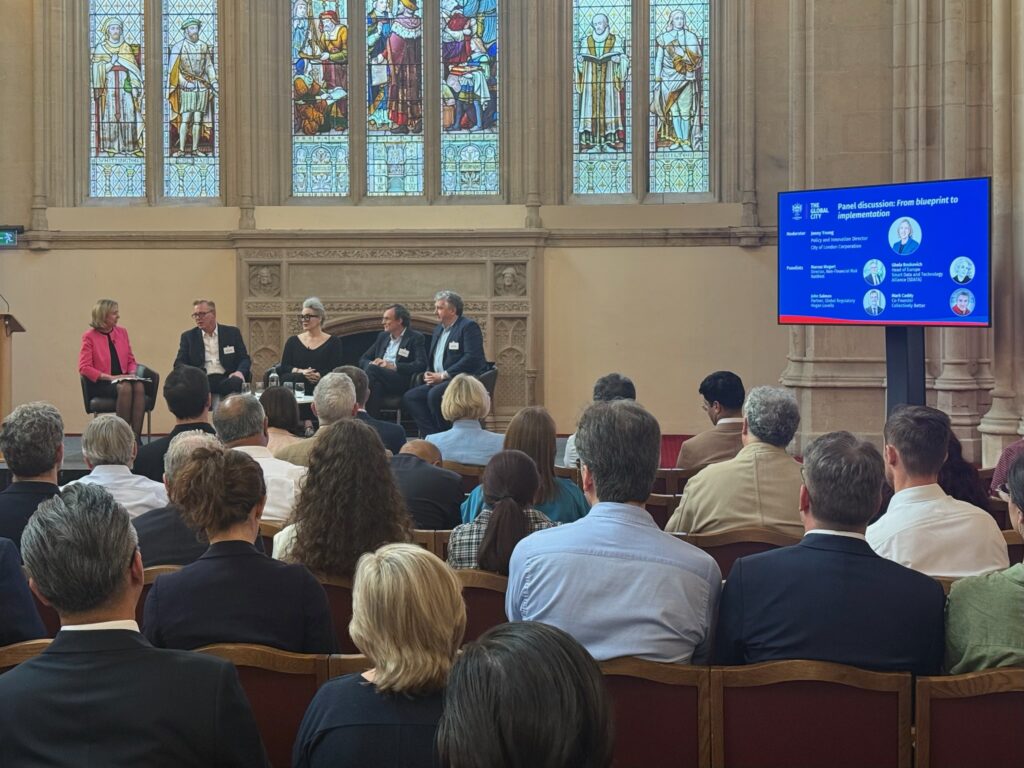
Chloe and I were fortunate enough to be invited to the launch of the City of London’s Digital Verification Orchestrator blueprint at Guildhall last night.
The DVO is an initiative to bring the City’s major financial institutions around to using shared standards and data for customer verification, rather than today’s practice of re-verifying everyone afresh every time they switch bank account or apply for a new product.
We’re big supporters of the DVO initiative.
The technology now exists to use digital evidence and official data to verify people to a high assurance level, and then share that data, with consent, with other institutions.
As of earlier this year there is also a strong legal and regulatory foundation for doing so, in the form of the digital verification services trust framework.
It promises to make verification safer and easier for everyone involved.
Vouchsafe ourselves already do this, supporting over 50 forms of digital ID from all around the world, and we were the first to automatically validate eVisas.
At the launch event, the claim that the DVO will be a big boost for inclusion was repeated no less than three times, but there was surprisingly little substance on the exact mechanism that will take.
As more of the world becomes locked behind strong verification, inclusion and ID poverty are becoming popular industry buzzwords, but real action to improve the actual mechanisms of verification is still mostly absent.
What exactly is ID poverty?
ID poverty describes the very large portion of the UK population who struggle to prove who they are, no matter the reason.
A good indicator of the scale is the 11 million who have no passport or driving licence. These are still the most commonly used identity documents in the UK, and are often the only choices when verifying digitally.
We call this ID poverty to emphasise that people are usually in this situation for reasons beyond their control.
How do you actually solve for inclusion?
Vouchsafe’s original innovation was biometric vouching; a way to prove who you are with the help of a trusted referee. We still offer it to this day and always will.
It’s a compliant, safe and fully digital way to feasibly verify everyone, including the tens of millions who don’t have standard photo ID or a UK data trail.
When we launched it in 2025, we expected that the industry would quickly follow suit and add it as a feature to their own platforms.
When GOV.UK updated the trust framework guidance in March to explain how vouching could be done in a compliant way, we again assumed that competitors would shortly implement it. It didn’t happen.
What else is being done?
It falls into two camps as far as I can tell.
There are now many private companies active in verification being very vocal about inclusion, but little evidence that it’s resulting in changes to how the products actually work.
On the government side there is a slightly more concrete answer, but not by much.
The digital ID explainer for the Starmer scheme announced last year promised to solve the problem through “dedicated casework”, but that seems very unlikely to scale to the level required to do so for tens of millions.
Is there any hope?
The threat of AI-era fraud is pushing great big chunks of the economy to introduce strong identity checks they didn’t have before.
That means the inclusion problem is more urgent than ever, as more and more vital services get locked behind verification barriers.
It will soon be too great for anyone to ignore, and we will then theoretically see this lip service turn into proper action.
Hopefully that will happen before the human cost becomes too great.
Vouchsafe is the UK’s leading inclusive identity verifier and orchestrator. We provide certified services. Get a free 14 day trial or book a conversation about your needs.